Following the Ōnin War (1467-77), Japan was in a century long state of turmoil with fighting among the many provincial daimyos and no ruling court. The Ashikaga shogunate was dismantled and the large provinces were broken up into smaller ones. With the emergence of new provinces, the daimyos took a new approach to consolidating and maintaining their power. The unification of Japan is attributed to three daimyos (Oda Nobunaga, Toyotomi Hideyoshi, Tokugawa Ieyasu) which paved the way to the Tokugawa period.
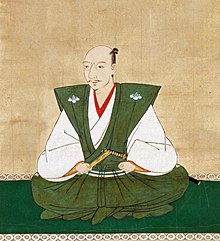
Oda Nobunaga was the first daimyo to begin the unification process, but committed seppuku before the unification was complete. He was able to accumulate power and status due to economic wealth as well as militant prowess. Nobunaga first unified the Owari provinces through warfare. He is known as one of the first daimyo to arm his men with muskets, an idea he borrowed from the Portuguese merchants that arrived in Japan. With this development, he was able to overpower those who opposed his rule following the death of his father. The Owari province included the Owari plain which contained plenty of fertile land. In addition, there was a rising merchant class which thrived under Nobunaga’s free trade policy where taxes and tolls were abolished. This all contributed to the abundance of economic capital from this region.
After taking control of the Owari province, Oda Nobunaga fought in the Battle of Okehazama in 1560. Imagawa Yoshimoto marched towards Kyōto to assist the diminishing Ashikaga shogunate. Yoshimoto joined forces with the Matsudaira clan from the Mikawa province. In order to reach Kyōto, they had to pass through Owari. Oda Nobunaga launched a surprise attack against their forces and defeated them through strategic planning, considering that they were vastly outnumbered. Nobunaga samurai were able to assassinate Yoshimoto, which lead to the fall of his army since they no longer had a leader. Soon, with no order to follow, Matsudaira Motoyasu (later changed his name to Tokugawa Ieyasu) formed an alliance with the Oda clan.
Oda Nobunaga continued his rise to power as he defeated daimyos in the surrounding regions. In 1561, Nobunaga proceeded to capture the Mino province, which was under the rule of the Saitō clan. During this time, the clan was under the new leadership of Saitō Tatsuoki, who lacked the knowledge and experience with military attacks. With this knowledge, Nobunaga convinced Tatsuoki’s retainers to join his side. In 1567, Nobunaga sieged Inabayaba Castle and renamed the region to Gifu. There were large fields of fertile land which gave Nobunaga more resources and agriculture to further consolidate his economical power.
Sources:
