Emaki During The Heian Period by Lynsey Stanicki

The illustrated hand-scroll emaki has been used in numerous paintings in the Heian Period. The paintings are made of sheets of paper or silk joined and rolled around a cylinder rod called a dowel. They can reach up to 40 ft in length. These scrolls originally came from China as pictorial purposes but inspired Japan to make it a more known art form. The paintings allow readers to immerse themselves deep within the narratives. (Varley, 89) The paintings have extreme detail and showcase vivid colors. Emaki expresses numerous themes such as religious and informative purposes. The art is conveying and tells a story without the viewer having to immediately read the text.

Well-known examples of these scrolls from the Heian period were “The Hungry Ghosts Scroll”, “Frolicking Animals” and The Tale Of Genji. On first glance, ”The Hungry Ghost Scroll” shows a power struggle from the ghosts and the civilians. Hungry ghosts were people who had passed away but had not done enough good and therefore had to live a life of torture. This scroll brought out the time of great unrest in Japan detailed by the chaos of the hungry ghosts. This piece was even assumed to promote the famine because of crop failure. “Frolicking Animals” represents humans by the tasks they are performing and their human-like characteristics. For example, the animals are standing on two legs and are socializing with the other animals while playing games and lifting materials. Different animals represent different classes and people groups. The emaki comments on the Buddhist Institution by the way the animals are portrayed. These are also best known in books such as in The Tale Of Genji. The scrolls reveal the complete and rich implications and allusions to human emotion which are woven within the intricate text of the Genji.

Emaki is important for tales because it shows the emotions of the people, nature and explores the imagination of the scenes for readers. Japanese illustrated handscrolls bring stories to life in an engaging way for readers to understand and explore.
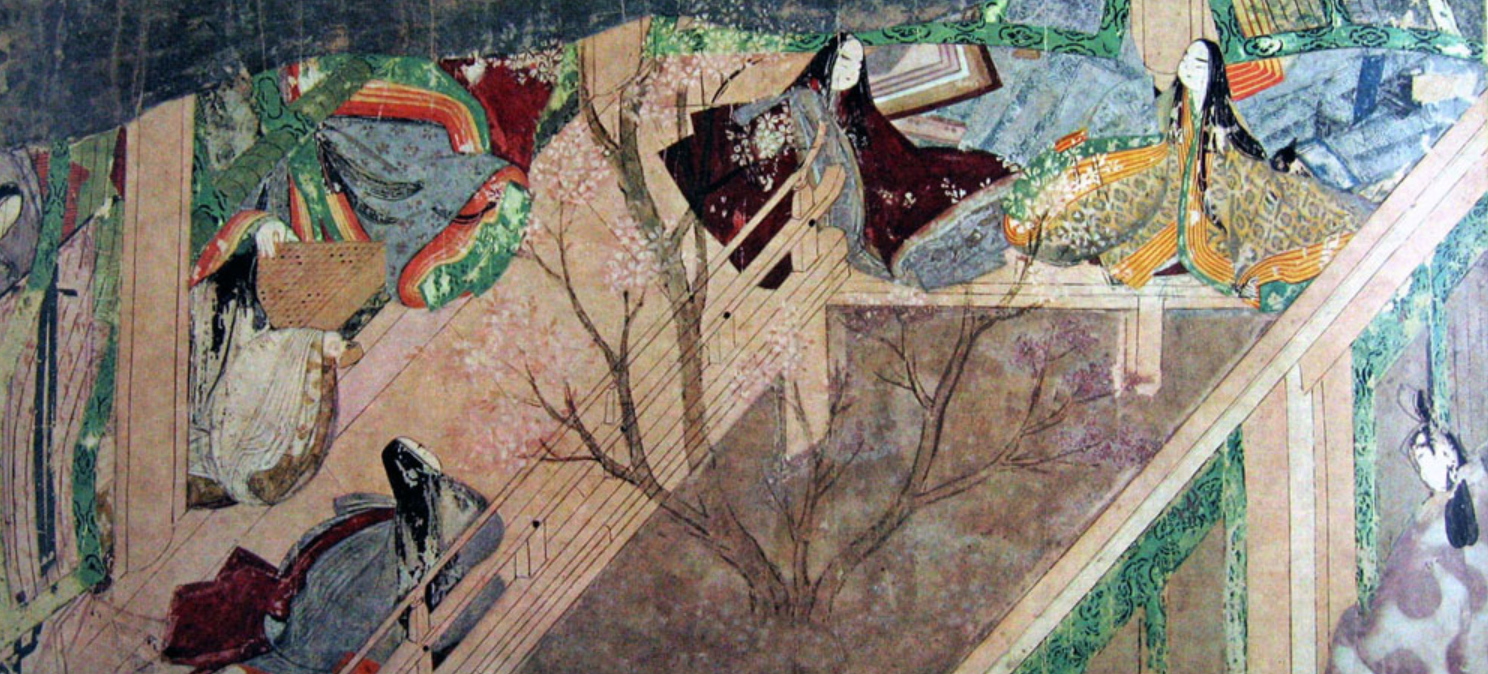
- Willmann, Anna. “Japanese Illustrated Handscrolls.” In Heilbrunn Timeline of Art History. New York: The Metropolitan Museum of Art, 2000–.
- Varley, Paul. Japanese Culture: Fourth Edition. University of Hawai’i Press, 2000, 89
- Farris, William Wayne. Japan to 1600: A Social and Economic History. Honolulu: University of Hawaii Press, 2014,115
- Watanabe, Masako. “Narrative Framing in the “Tale of Genji Scroll”: Interior Space in the Compartmentalized Emaki.” Artibus Asiae 58, no. 1/2 (1998): 115-45. doi:10.2307/3249997,115
